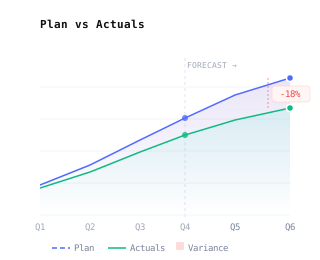
Plan vs Actuals
The Problem
Your finance team spends days every month reconciling budgets in spreadsheets.
They're comparing actuals to plan, hunting down discrepancies, explaining variances.
By the time the report is done, the month is halfway over.
Leadership gets outdated numbers. You can't make decisions in real-time. Finance becomes a reporting function instead of a decision function.
What Actually Happens
Instead of analyzing performance, your team is:
- Manually pulling numbers from multiple systems
- Reconciling inconsistent definitions across spreadsheets
- Recalculating variances by hand
- Waiting until month-end to see what actually happened
- Explaining "why" instead of driving decisions
What It Should Look Like
Real-time visibility into budget vs actual across your entire business. You see:
- Exactly where you're over budget (and by how much)
- Which cost centers are driving the variance
- What actually happened vs what you planned
- Real numbers leadership can trust (not guesses)
How It Works
Your financial data (from your ERP, accounting system, wherever it lives) flows into a system that:
- Standardizes how you define budgets, costs, and accounts (one version of the truth)
- Automatically calculates variances daily (not monthly)
- Organizes everything so you can see it by cost center, department, or line item
- Delivers it to a dashboard your team actually uses
No manual work. No spreadsheets. No waiting for month-end.




What Changes
Before
- 2-3 days per month on budget reconciliation
- Reports delivered after the month is closed
- Leadership operating on yesterday's numbers
- Finance team stuck in spreadsheets instead of analysis
After
- Budget visibility every single day
- Decisions made in real-time (not next month)
- Leadership sees actual vs plan instantly
- Finance team focuses on 'why' not 'where are the numbers?'
The Real Benefit
Finance stops being a reporting function and becomes a decision function. Your team can answer questions immediately:
"Are we on track for the quarter?" "Which budget is overrunning and why?" "What does our actual P&L look like today?"
No waiting. No spreadsheets. No excuses.
Why This Matters
Most finance teams work with month-old data. By the time you know what happened, the month is over and you've already spent the budget. Real-time visibility means you can actually manage your finances instead of just reporting on them.
The System You Own
Here's the important part: You own this completely. This isn't another tool you're locked into. This is your system, your code, your data. You control it. If you want to change it, you can. If you want to move it, you can. No vendor lock-in. It lives in your infrastructure. Your data never leaves your control.
Next Steps
Want to see what this could look like for your business? Or explore the docs? Check below.